Egypt
Don't Leave God Alone: How to Get God's Attention, Remain in His Presence, and Even Change His Mind to Make a Difference in Your WorldEgypt functions in the book as more than a biblical location. It is the place from which God delivered the Israelites, the setting for Pharaoh’s oppression and the plagues, and the remembered past that continued to shape the people even after their departure. The book repeatedly returns to Egypt to teach that deliverance requires both God’s intervention and a determined response of faith: people must leave bondage, move forward, and refuse to let the mentality of slavery govern their future.
Egypt as the House of Bondage
Egypt is introduced as the land in which the Israelites endured four hundred years of bondage. Their captivity establishes the central contrast attached to the location: Egypt represents forced limitation, while departure from Egypt represents the beginning of freedom and movement toward the Promised Land. Yet the long duration of slavery also explains why liberation could not be reduced to a change of geography. After generations under Pharaoh’s control, the Israelites had learned to see themselves as people who were bound and vulnerable.
The book links Egypt with the human tendency to seek God only in crisis. During the uncertainty surrounding the September 11 attacks, churches and prayer meetings became crowded as people sought the Lord for protection and understanding; the author compares this renewed dependence with the biblical pattern in which people forget God during prosperous times but run to Him when trouble arrives. Egypt therefore becomes part of a broader spiritual memory: hardship can awaken dependence on God, but temporary attention is not the same as a committed relationship. Leaving Egypt requires more than turning to God when danger becomes unavoidable.
Pharaoh, Idolatry, and the Need for Deliverance
The account of the golden calf places Egypt inside Israel’s crisis of memory. After God had brought the people out of Egypt, they made a molded calf, worshiped it, sacrificed to it, and credited it with the deliverance that God had performed. In the cited account, Aaron called the calf the Lord, while the people declared that the calf had brought them out of the land of Egypt. The offense was therefore not only idolatry but a deliberate misattribution of the saving act: the people replaced the God who had delivered them with an object they had made.
This apostasy provoked God’s anger. In the exchange with Moses, God described the people as stiff-necked and told Moses to leave Him alone so that His wrath could burn against them and consume them, while promising to make a great nation from Moses. Moses refused to withdraw. He appealed to God’s reputation among the Egyptians and recalled the covenant promises given to Abraham, Isaac, and Israel. The passage is used to show that prayer can persist even when God’s anger is real; Moses’s intercession led the Lord to relent from the harm He had announced. Egypt thus remains present not only as the place of former slavery but as the surrounding witness before which Israel’s identity and God’s faithfulness are contested.
Departure, Pursuit, and the Red Sea
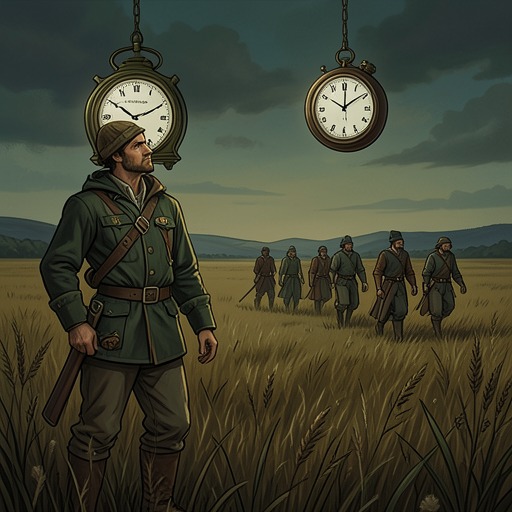
The Exodus begins with joy and apparent triumph. After Pharaoh finally permitted the Israelites to leave, Moses led millions of people out of Egypt toward the Promised Land. The release immediately turned precarious when Pharaoh and his army pursued them and the Red Sea blocked the way ahead. The Israelites were caught between the army behind them and the water before them, a situation that made the past physically visible: Pharaoh’s forces represented the power they had escaped, while the sea represented the obstacle standing between bondage and inheritance.
Moses first told the people not to be afraid and to stand still while the Lord rescued them. He then cried out to God, receiving a response that could sound like a rebuke: God asked why he was crying out and instructed the people to move forward. The book interprets this command not as divine indifference but as a summons to expectant action. Moses already had told the people that the Lord would fight for them; he now had to act on that confidence rather than remain immobilized by fear.
God told Moses to pick up his rod, raise his hand over the sea, and divide the water so the Israelites could cross on dry ground. The rod carried a history of authority: near water it had turned water into blood, and before Pharaoh it had become a serpent. The signs associated with it had helped intimidate Pharaoh and contributed to the release of the people. When Moses stretched out his hand, the sea opened a path for Israel; when he stretched it out again, the waters returned and covered Pharaoh’s chariots, horsemen, and entire army. The crossing therefore accomplished two things at once: it created a route into the future and destroyed the pursuing power of the past.
The Pharaoh Mind-Set After Egypt
The book argues that the Israelites needed deliverance from a “spirit of Pharaoh,” meaning a slavery mind-set formed by four hundred years of subjection. Pharaoh had been a taskmaster associated with control and manipulation, and the people had become accustomed to feeling bound and expecting their captors to overcome them. Even after leaving Egypt, they could carry Egypt inwardly through fear, rebellion, and a diminished view of themselves.
This mind-set is described as an obstacle to destiny. Pharaoh’s killing of children is treated as an image of an aborted future, while Israel’s self-perception as lesser than the Egyptians represents the internalization of worthlessness. The same inheritance could harden the heart: Pharaoh repeatedly hardened his heart against God, and Israel carried a related hard-hearted rebellion out of Egypt. The location consequently becomes a psychological and spiritual category. A person may be physically outside Egypt yet still respond as a slave, allowing old memories, intimidation, and expectations of defeat to prevent forward movement.
The book applies this pattern to contemporary bondage. People may need deliverance from evil spirits or from harmful situations such as debt and marital conflict, even when those circumstances arise more directly from human choices than from demons. The recommended response is persistent prayer, use of God’s Word and the name of Jesus, belief that God desires freedom, steadfast resistance, refusal to abandon deliverance, and continued fellowship with an anointed pastor and church. Egypt supplies the foundational image for this process: freedom must be received, defended, and inhabited.
Egypt as a Memory Used for Present Faith
Egypt is repeatedly recalled to interpret later moments of danger and healing. On an American Independence Day, while driving to a hospital after a child from the author’s church had been involved in a serious accident, the author prayed that God would deliver the child as He had delivered America. The national memory of independence was joined to the biblical memory of deliverance from Egypt, turning a personal emergency into a chain of remembered rescues. The child was later found to have only a slight concussion, with no broken bones or internal injuries, and the event was interpreted as a result of angelic protection and persistent prayer by the family and church.
The same pattern appears when a newborn girl suffered from an incurable disease attacking her liver and blood. Her liver was failing, doctors gave her only an 11 percent chance of survival, and days of church prayer seemed to produce little improvement. The author compares the apparent silence surrounding the child’s condition with the uncertainty associated with Elisha, who had to determine whether God’s power would be present as it had been for Elijah. Egypt’s significance lies in this recurring logic: delayed visible change does not prove abandonment, and the memory of prior deliverance becomes an argument for continued faith.
The book also returns to the plague of frogs in Egypt to describe people who postpone freedom. Pharaoh promised to release the Israelites if the frogs disappeared, but when Moses asked when he should pray, Pharaoh answered, “tomorrow.” The phrase “one more day with the frogs” names the choice to tolerate bondage because immediate release feels less attractive than familiar captivity. Egypt is therefore not only the place where oppression is imposed; it is also the setting from which the book derives a warning about consenting to remain bound.
From Egypt Toward the Future
The movement away from Egypt is presented as a pattern of spiritual progress. The Israelites had to stop looking backward toward the pursuing army and move toward the future promised by God. The Red Sea had to be crossed with authority, and the book identifies that contemporary “rod” with the name of Jesus and the authority believers share with Him. The point is not that the obstacle is small, but that an apparently impossible sea is not impossible for God when faith acts upon His promise.
The book extends the same movement to the revival of dead dreams. Even when a dream has come out of the grave, people may continue to wear “graveclothes,” carrying old habits and former ways of thinking into a new season. Bound hands restrict service and work; bound feet represent habits and sins that cause people to fall; and bound eyes, mouth, ears, and thoughts prevent fresh vision, faithful speech, receptive hearing, and a renewed mind. In this framework, Egypt is one of the primary forms of the past that must not be allowed to define the future.
The location’s decisive narrative significance is therefore its double identity. Egypt is the historical place of Israel’s oppression and the symbolic name for every inherited pattern that contradicts freedom. Its army can be defeated, its waters can open, and its inhabitants can depart, but the deeper work is to cease thinking like slaves. Persistent prayer, expectant action, and the authority represented by Moses’s rod enable the people to pass through the crisis rather than camp beside it. Egypt remains behind only when deliverance becomes both an outward event and an inward transformation.